
In troubled times, the message of Easter resonates when ‘she’ll be right’ doesn’t cut it | The Post
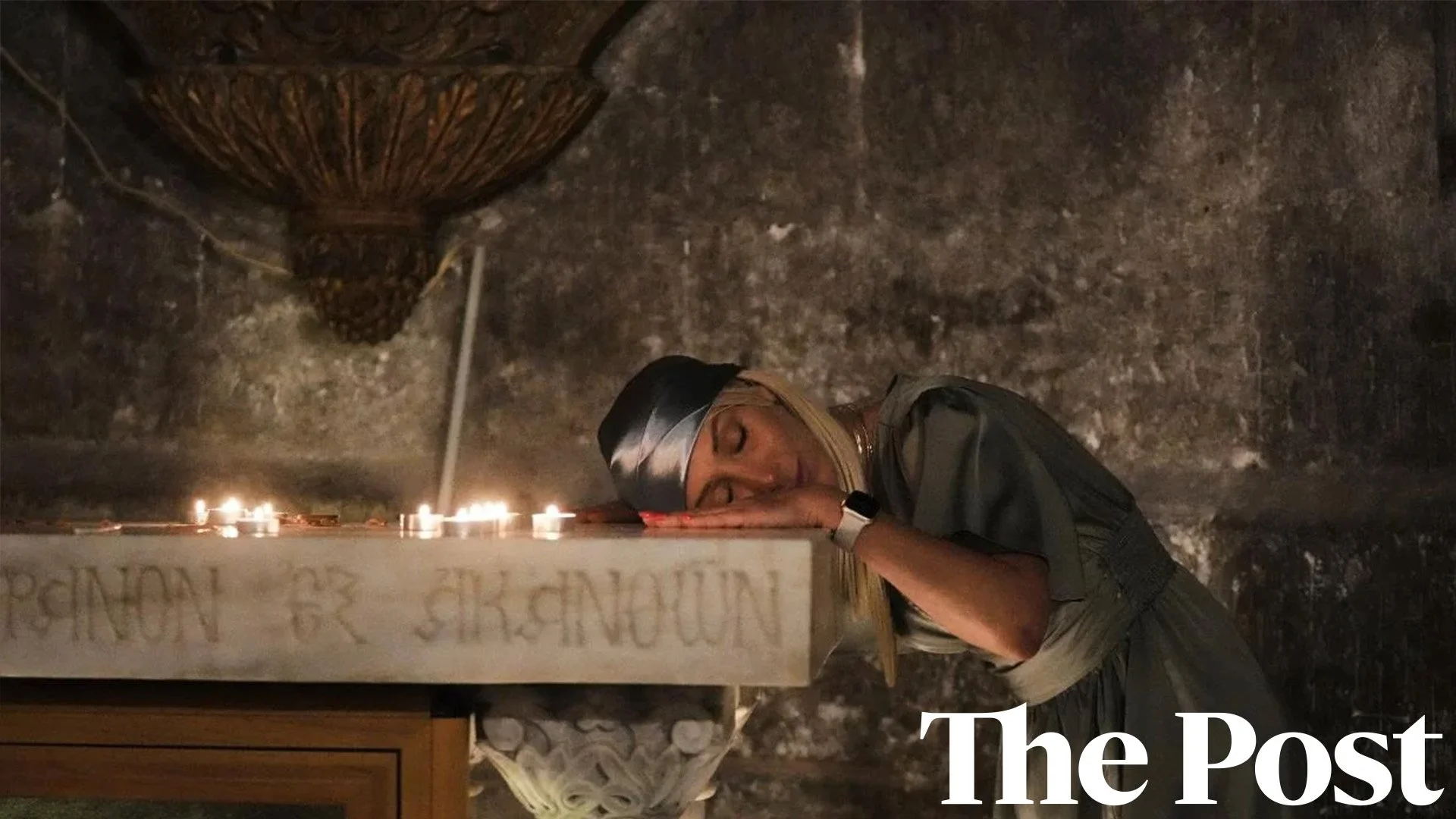
A Christian pilgrim rests her head while praying during Easter Sunday Mass 2025, at the Church of the Holy Sepulcher, the site where according to tradition Jesus was crucified and buried, in Jerusalem's Old City.MAHMOUD ILLEAN / AP
Each Easter, I do my best to deliver a meaningful message befitting of the significance of this season – a responsibility and privilege I’m grateful for.
But I guess this year I’ve struggled a bit to find a message that encourages and brings hope. Don’t get me wrong, I’m not in a “dark night of the soul”, crisis of faith situation. But the litany of the world’s woes and human misery is not getting any shorter. Deep down, even we Kiwi are not fooled by “she’ll be right” platitudes.
Despite the bumper stickers you might have seen, the way of Jesus is not built on good feelings and denial of reality. It is built on confronting the darkest evil and deepest hopelessness.
The day before Jesus is crucified, he has a final meal with his friends, after which he heads to a garden, an olive grove. He knows what’s about to happen here. Judas the informant has already abandoned dinner, and Jesus knows that religion is siding with empire, that his arrest is imminent, and his brutal execution is inevitable.
In this moment, I believe we see one of the healthiest ways of dealing with human misery: Jesus prays – but it’s how he prays that’s key here.
First up, he seeks companionship in his suffering. He may have to suffer, but he doesn’t need to suffer alone. He asks his mates James and John just to be with him. He doesn’t remove himself out of politeness for their feelings. He’s honest with them about how he’s feeling: “my soul is crushed… stay here with me”. I need you, my friends.
Second, he’s direct and honest. “God, you’re my Father. How can a loving Father do this to their child?” Jesus laments with God, not sugar-coating reality. He asks God to take what’s about to happen away. And he asks three times. Luke’s version says that he sweats blood.
Third, Jesus acknowledges that he doesn’t have the bigger picture: “Yet not what I want, but what you want, God,” or “I choose to believe that good is possible in this, even though I can’t see it”. Despite all of this, Jesus is able to continue believing in the goodness of God, which is witnessed three days later in his resurrection.
I wonder if that’s a good model for us, too, as we try to find any sense of the fragility of the world around us. We need companionship, not isolation. We need honesty, not escapism – telling God (even if you struggle to believe) that we know that the injustice we see is not how it should be. We need to believe that good is still possible and that evil will not prevail, even when we can’t see the whole picture.
In the meantime, in the garden after Jesus prays, he says to his mates, “come, let’s go”, knowing that what lies ahead is arrest and betrayal. They deliberately walk towards what is hard.
Martin Luther King Jr, someone intimately acquainted with the struggle of this world, once said “the arc of the moral universe is long, but it bends towards justice”. In Christianity, we have the added hope that one day, in a mirror of the dawn of Easter Sunday when Jesus defeated death and love won, God will complete the work of making all things new: restored, re-created, liberated. So we choose to keep going.
This year I was meant to be in Jerusalem and the West Bank for Easter, on a pilgrimage exploring some of the work of liberation and peace-making that Christians, Muslims and Jews are hopefully continuing.
Given the violence unfolding in the Middle East, seeing their work in person is not possible, but I know they will continue loving each other, whether or not the bombs fall.
They are people who live with the long arc of the moral universe every day and continue to walk on. We have to too: loving the people right in front of us, knowing that glimpses of new life are possible now, until a new day dawns on the horizon.
Written by Justin Duckworth. Justin is the Bishop of Wellington and one of the Anglican Church’s three archbishops of Aotearoa New Zealand.